Forgive Others for Their Misdeeds Over and Over Again This Gesture Fosters Inner Ease ã¢â‚¬â
"Spiritual progress requires us to highlight what is essential and to disregard everything else as trivial pursuits unworthy of our attention," says Epictetus (55-135 AD), the Greek Stoic philosopher whose teachings have echoed through the ages, shaping the thoughts of a host of intellectual giants, from Roman Emperor Marcus Aurelius to Descartes, Spinoza, Rousseau, Nietzsche, Marx and the Founding Fathers of the United States.
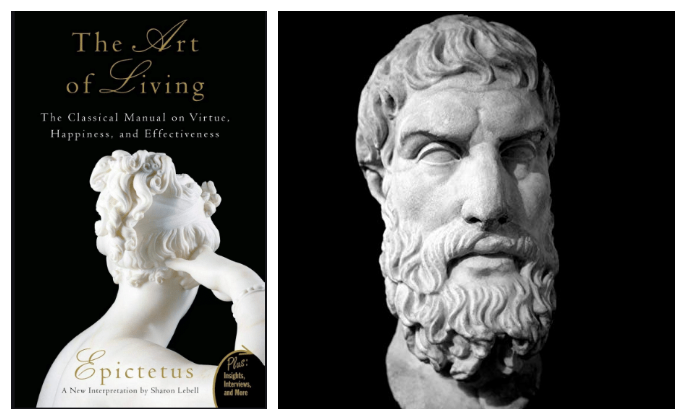
Indeed, Epictetus' teachings – compiled by philosophical author and editor Sharon Lebell in The Art of Living : The Classical Manual on Virtue, Happiness, and Effectiveness (1995) – offer timeless wisdom for those of us in the 21st century seeking guidance on how to journey well through life.
Urging us to turn our focus abroad from external circumstances that prevarication across our control and toward the inner refinement of our own character, Epictetus' ideas are highly accessible and relevant for the ordinary, every day homo being trying to alive a good, fulfilling life.
Lebell writes:
"Office of [Epictetus'] genius is his accent on moral progress over the seeking of moral perfection. With a bully understanding of how easily we man beings are diverted from living past our highest principles, he exhorts us to view the philosophical life every bit a progression of steps that gradually approximates our cherished personal ideals."
In other words, Lebell explains, Epictetus teaches that:
"Moral progress is non the natural province of the highborn, nor is it achieved by accident or luck, but by working on yourself – daily."
Below are some of Epictetus' insights on how to practice simply that:
1. First and foremost, we must learn to distinguish between that which we tin and cannot control:
"Happiness and liberty brainstorm with a clear agreement of one principle: Some things are within our command, and some things are not…
Within our control are our opinions, aspirations, desires, and the things that repel us…We always have a choice about the contents and grapheme of our inner lives.
Outside our command, still, are such things as what kind of torso nosotros have, whether nosotros're born into wealth or strike it rich, how we are regarded past others, and our status in guild. We must remember that those things are externals and are therefore not our business organization. Trying to control or to change what we tin't merely results in torment."
2. How we choose to perceive things is incredibly powerful:
"Things themselves don't hurt or hinder usa. Nor exercise other people. How we view these things is another matter. It is our attitudes and reactions that requite us trouble.
Therefore even decease is no big deal in and of itself. Information technology is our notion of death, our idea that it is terrible, that terrifies us. There are then many different ways to think about death. Scrutinize your notions most death – and everything else. Are they really true? Are they doing you any adept?Don't dread death or pain; dread the fear of decease or pain.
We cannot choose our external circumstances, but we can always choose how we respond to them."
3. Pay no listen to what others recall of you:
"Don't be concerned with other people'south impressions of you. They are dazzled and deluded by appearances. Stick with your purpose. This alone will strengthen your will and requite your life coherence."
4. Practise not seek the approval or admiration of others:
"Never depend on the admiration of others. At that place is no strength in information technology. Personal merit cannot be derived from an external source. It is non to be found in your personal associations, nor can it be found in the regard of other people. It is a fact of life that other people, even people who beloved y'all, will not necessarily hold with your ideas, understand you, or share your enthusiasm. Grow up! Who cares what other people remember about yous! Create your own merit."
5. Await for the opportunity in every difficulty:
"Every difficulty in life presents united states of america with an opportunity to turn inward and to invoke our own submerged inner resources. The trials we suffer can and should introduce the states to our strengths. Prudent people expect across the incident itself and seek to form the habit of putting it to good utilize."
half-dozen. E'er strive for self-improvement and hold yourself accountable:
"Attach yourself to what is spiritually superior regardless of what other people think or do. Hold to your true aspirations no matter what is going on around you."
[…]
"When we remember that our aim is spiritual progress, we return to striving to be our best selves. This is how happiness is won."
[…]
"No thing where yous find yourself, deport yourself as if you lot were a distinguished person. While the behavior of many people is dictated by what is going on around them, concord yourself to a college standard."
seven. Self-refinement is a noble job, and a lifelong process:
"Goodness isn't ostentatious piety or showy good manners. It'south a lifelong series of subtle readjustments of our character. We fine-tune our thoughts, words, and deeds in a progressively wholesome direction…When y'all actively appoint in gradually refining yourself, you retreat from your lazy ways of roofing yourself or making excuses."
[…]
"To live an extraordinary life means nosotros must drag our moral stature by culturing our graphic symbol. The untrained brood most the constituent elements of their lives. They waste material precious time in regret or wishing their particulars were dissimilar…[t]he morally trained, rather than resenting or dodging their current life situations and duties, requite thanks for them and fully immerse themselves in their duties to their family, friends, neighbors, and chore. When we succumb to whining, we diminish our possibilities."
8. Remember, appearances aren't everything:
"How easily dazzled and deceived we are past eloquence, task championship, degrees, loftier honors, fancy possessions, expensive clothing, or a suave demeanor. Don't make the mistake of assuming that celebrities, public figures, political leaders, the wealthy, or people with corking intellectual or artistic gifts are necessarily happy. To practice and then is to exist bewildered by appearance and will only make you doubtfulness yourself."
nine. What matters near is who we are on the inside:
"Those who seek wisdom come up to understand that even though the world may advantage us for wrong or superficial reasons, such as our physical appearance, the family we come from, and then on, what really matters is who we are inside and who nosotros are becoming."
10. Humility is wisdom:
"Don't exist puffed up with pride if you are able to provide for your needs with very little cost. The first task of the person who wishes to live wisely is to free himself or herself from the confines of self-absorption."
[…]
"A life based on narrow self-interest cannot exist esteemed by whatsoever honorable measurement. Seeking the very all-time in ourselves means actively caring for the welfare of other homo beings."
11. Self-discipline and self-awareness are important:
"To ease our soul'due south suffering, we engage in disciplined introspection in which nosotros conduct idea-experiments to strengthen our ability to distinguish betwixt wholesome and lazy, hurtful beliefs and habits."
[…]
"Be suspicious of convention. Take charge of your own thinking. Rouse yourself from the daze of unexamined belief."
12. Nosotros are not called to approximate others:
"Generally, we're all doing the best we tin. When someone speaks to you curtly, disregards what you say, performs what seems to be a thoughtless gesture or even an outright evil human action, think to yourself, 'If I were that person and had endured the aforementioned trials, borne the aforementioned heartbreaks, had the same parents, and then on, I probably would take done or said the aforementioned thing.' We are not privy to the stories behind people'due south actions, so we should be patient with others and suspend our judgment of them, recognizing the limits of our understanding. This does not mean we disregard evil deeds or endorse the thought that different deportment behave the aforementioned moral weight."
13. But nosotros are chosen to forgive people – and ourselves:
"Homo betterment is a gradual, two-steps-forwards, ane-step-back effort. Forgive others for their misdeeds over and again. This gesture fosters inner ease. Forgive yourself over and over and over again. Then attempt to do better next time."
fourteen. Our habits – of thinking, being and acting – thing:
"Every habit and faculty is preserved and increased past its corresponding deportment: The habit of walking makes united states of america better walkers, regular running makes us ameliorate runners. It is the same regarding matters of the soul. Whenever y'all are aroused, you increment your anger; you lot take increased a addiction and added fuel to a fire."
fifteen. Nosotros have bureau in our lives – and are to use information technology:
"Renounce externals once and for all. Practice self-sufficiency. Don't remain a dependent, malleable patient. Become your ain soul's md."
16. Practise not compromise yourself for the sake of others:
"In trying to please other people, we find ourselves misdirected toward what lies outside our sphere of influence. In doing so we lose our hold on our life'southward purpose. Content yourself with existence a lover of wisdom, a seeker of truth. Return and return again to what is essential and worthy. Exercise not attempt to seem wise to others."
17. Resist the allure of instant gratification:
"Practise the art of testing whether particular things are actually proficient or not. Learn to wait and assess instead of always reacting from untrained instinct. Spontaneity is non a virtue in and of itself.
If some pleasure is promised to you and it seductively calls to you, stride dorsum and give yourself some time before mindlessly jumping at information technology…Volition this pleasure bring simply a momentary please, or real, lasting satisfaction? It makes a deviation in the quality of our life and the kind of person we go when we learn how to distinguish between cheap thrills and meaningful, lasting rewards."
18. Recognize that God is in control – and has our best involvement in heed:
"The essence of faithfulness lies first in holding correct opinions and attitudes regarding the Ultimate. Remember that the divine society is intelligent and fundamentally expert. Life is not a series of random, meaningless episodes, but an ordered, elegant whole that follows ultimately comprehensible laws.
The divine will exists and directs the universe with justice and goodness. Though it is not always apparent if you merely look at the surface of things, the universe we inhabit is the best possible universe.
Gear up your resolve on expecting justice and goodness and social club, and they will increasingly reveal themselves to you in all your affairs. Trust that there is a divine intelligence whose intentions direct the universe. Make it your utmost goal to steer your life in accordance with the volition of divine order."
When yous strive to conform your intentions and deportment with the divine order, you don't feel persecuted, helpless, dislocated, or resentful toward the circumstances of your life. You will experience potent, purposeful, and sure.
Faithfulness is not blind belief; it consists of steadfastly practicing the principle of shunning those things which are not within your control, leaving them to be worked out according to the natural system of responsibilities. Cease trying to anticipate or control events. Instead accept them with grace and intelligence."
[…]
"Faithfulness is the antidote to bitterness and confusion. It confers the conviction that we are ready for anything the divine volition intends for us. Your aim should be to view the world equally an integrated whole, to faithfully incline your whole being toward the highest good, and to adopt the will of nature as your own."
nineteen. Relinquish the notion that happiness is dependent on certain external weather beingness met:
"Your happiness depends on three things, all of which are within your power: your will, your ideas apropos the events in which you lot are involved, and the use you make of your ideas. Authentic happiness is ever contained of external conditions. Vigilantly practice indifference of external conditions. Your happiness can only exist found within."
xx. Finally….hold fast to this:
"Caretake this moment. Immerse yourself in its particulars. Respond to this person, this challenge, this deed. Quit the evasions. Stop giving yourself needless trouble. Information technology is time to really live; to fully inhabit the situation you lot happen to be in now. You are not some disinterested bystander. Participate. Exert yourself.
Respect your partnership with providence. Ask yourself ofttimes, How may I perform this particular deed such that it would be consistent with and acceptable to the divine will? Listen the answer and go to work.
When your doors are shut and your room is dark, you are not alone. The volition of nature is within you as your natural genius is inside. Mind to its importunings. Follow its directives.
As concerns the art of living, the material is your own life. No cracking thing is created of a sudden. At that place must be time. Requite your best and always exist kind."
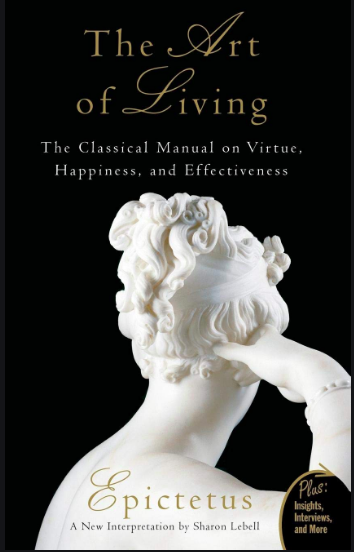
The Art of Living is a slim, piece of cake-to-read book that distills Epictetus' wisdom and applied tips for living a grounded, fulfilling life. A truly enjoyable read, it at once challenges and inspires, and is a book worth revisiting regularly.
Epictetus, together with Marcus Aurelius and Seneca, is considered i of the most important Stoic philosophers. Born a slave in 55 AD, he subsequently obtained freedom and moved to Rome where he taught philosophy for nearly 25 years. After being banished past the Roman Emperor around 93 Advert, he fled to Nicopolis in Greece where he founded a philosophy school and taught in that location until his expiry in 135 AD.
Similar posts:
- Recall Carefully: Marcus Aurelius on How to Control the Mind
- Gisele Bündchen on Self-Awareness, Challenging Your Thoughts and Paying Attention to Your Inner Voice
- The Dalai Lama and Archbishop Desmond Tutu on the Four Qualities of the Heed that Lead to Blithesome Living
- Claiming Responsibility for Our Lives: Thomas Merton on Discovering Meaning and Purpose Within
- Be Still: The Desert Fathers on the Value of Solitude
Source: https://theinwardturn.com/epictetus-on-how-to-live-a-good-fulfilling-life/
0 Response to "Forgive Others for Their Misdeeds Over and Over Again This Gesture Fosters Inner Ease ã¢â‚¬â"
Post a Comment